
Features that allow artists to engage more deeply with their fans have become staples of modern streaming platforms. One such feature is Spotify Canvas. This article covers everything you need to know about Spotify Canvas – what it is, how to add one on your own, the exact specifications, and best practices for using it effectively. Let's take a closer look.
What is Spotify Canvas?
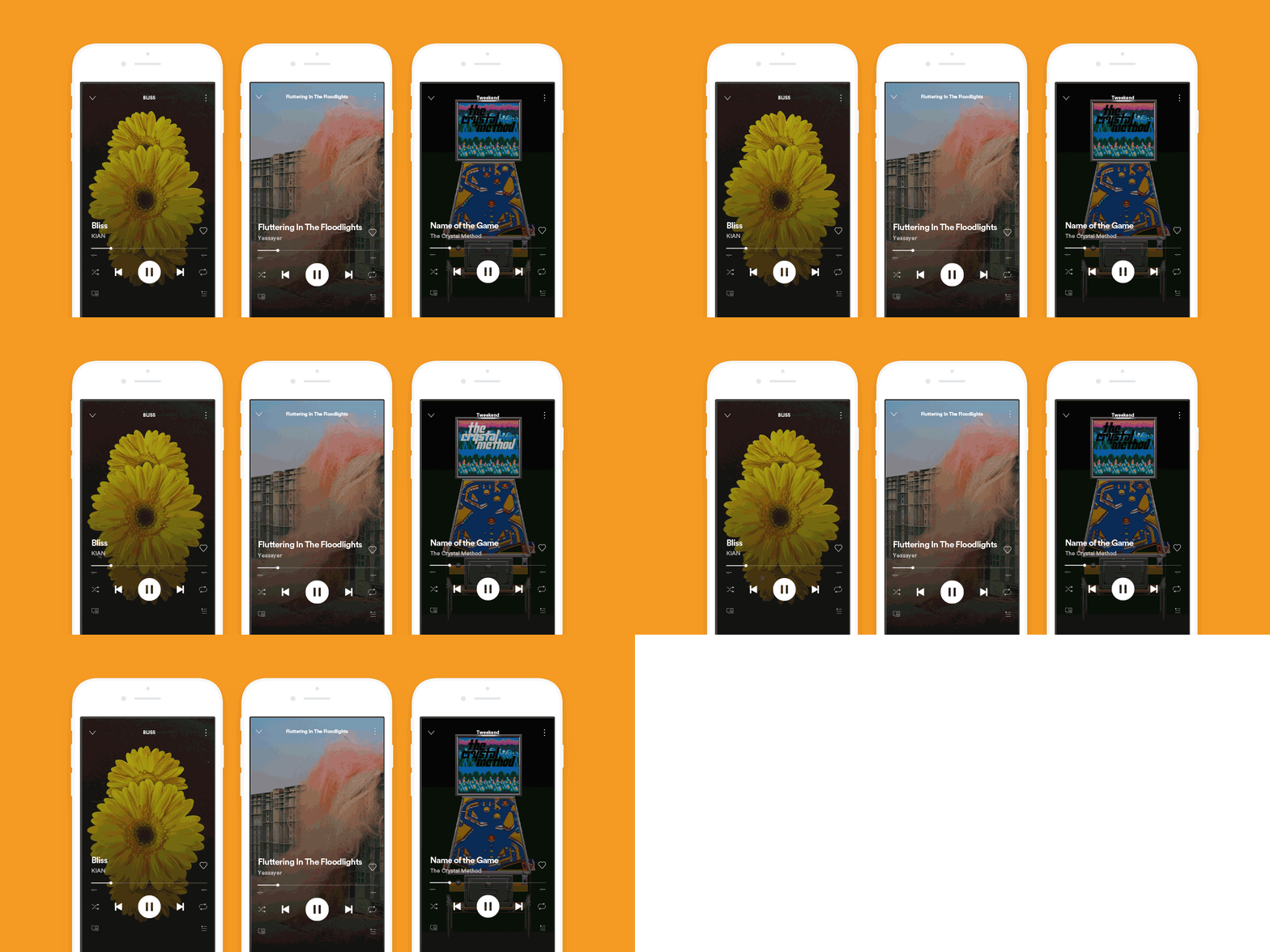
A Spotify Canvas is a 3–8 second, vertical, looping video shown in the “Now Playing” view on the mobile Spotify app while a song plays, replacing static album art. The concept lies somewhere between album artwork and music videos, with examples ranging from a continuous animation loop to simple repeating video clips, hard cuts, or 2D/3D motion graphics. “It's album artwork for the streaming age,” as Spotify states. Every track on Spotify can have its own Canvas, and it's important to note that Canvases can be switched or changed at any time.
As Spotify has explained, Canvas is meant to be a space for artists' visual storytelling. Whatever is displayed while a song is being streamed can become a valuable part of, or even help expand, the story or emotion behind the track, creating a broader visual narrative. At the same time, it can help listeners better engage with the song – giving them a clearer glimpse of the song's meaning or the artist's vision – and ultimately enhancing their listening experience on Spotify.
This might also be because Canvas complements a more passive, lean-back listening experience, rather than functioning as a standalone audio-visual product, similar to a music video, which is designed for active viewing. This means that listeners can enjoy music however they prefer and become more engaged through the visuals in the Now Playing view, without needing to focus too closely on what is happening on screen.
How Spotify Canvas Boosts Streams and Engagement
Spotify Canvas is a proven tool for boosting engagement, increasing streams, and growing your fan base. According to Spotify’s data, if a track has a Canvas, listeners are more likely to keep streaming (+5% on average vs. the control group), share the track (+145%), add to their playlists (+20%), save the track (+1.4%), and visit an artist's profile page (+9%).
Here are some benefits in more detail:
- Canvas increases time spent on the Now Playing screen. When listeners see a visually engaging loop, they are more likely to stay on the screen rather than swipe away to browse other content. This increased dwell time on the Now Playing view tends to correlate with lower skip rates and higher save rates.
- Canvas encourages sharing behavior. Every social media user responds well to strong visuals. As Spotify allows fans to share a track's Canvas as a video clip to Instagram Stories, Snapchat, and other platforms, all they really need is something visually interesting, and they are often ready to share it with others. This seemingly small thing can do a lot of good for an artist, promoting their music and driving traffic back to their track.
- It also helps create a professional impression. Spotify Canvas was first launched in 2019, and 6 years later, it's become an almost integral part of every newly released track. Generally speaking, people are significantly more likely to notice something that is moving compared to something that is static. For that reason, Canvas is more likely to attract listeners' attention and make a stronger first impression. It signals to listeners that you've invested in your track's presentation and care about how it is experienced.
Before vs After Adding Canvas
- Without Canvas: Static artwork, lower engagement signals
- With Canvas: Higher shares, more saves, and an increased likelihood of continued streaming
In practice, this means listeners are more likely to interact with your track, which can positively influence Spotify’s recommendation system over time. You can track key engagement metrics and see how your Canvas is helping your track directly through your Spotify for Artists profile.
Spotify Canvas Specifications
To upload a Spotify Canvas successfully, your file must meet the following exact requirements:
- Aspect ratio: 9:16 (vertical)
- Minimum resolution: 720 x 1280 pixels, recommended 1080 x 1920
- Frame rate: 24fps minimum
- Length: 3–8 seconds
- Maximum file size: 8 MB
- File format: MP4 (recommended) or JPG (static)
- Content restrictions: avoid excessive text, logos, or distracting overlays, and ensure your Canvas complies with Spotify’s content policies and rating guidelines
Keep in mind that these specs are non-negotiable. If your file doesn't match them, Spotify will reject the upload.
Pro tip: MP4 video loops consistently outperform static JPG images in terms of engagement and shares.
How to Add Spotify Canvas to My Tracks
Adding your Canvas to a track is incredibly simple – and, importantly, completely free to use. Before adding a Canvas, make sure your music is live — here’s how to upload music to Spotify.
Now, to add your Canvas, all you need is your phone or computer, and the visual you'd like to add to one of your tracks.
- Log in to your Spotify for Artists profile (it can be a desktop or mobile app).
- Go to Music and select the track for which you want to add a Canvas.
- Scroll to the Canvas section and click Add Canvas (Edit Canvas if there is already a Canvas applied to that track).
- Upload your Canvas video file.
- Preview the loop to check for seamless transitions.
- Submit your file for review. The approval process typically takes around 24–48 hours.
Managing your visuals is just one part of building a strong presence on Spotify. With iMusician, you can organize your releases, update your assets, and manage your Spotify artist profile in one place via the Artist Hub.
Cuidar da identidade visual é só uma etapa na construção de uma presença consistente no Spotify. Com a iMusician, você organiza seus lançamentos, atualiza seus materiais e gerencia seu Spotify for Artists, tudo em um só lugar, pelo Artist Hub.


Spotify Canvas Best Practices and Tips
There's a lot of creative freedom when it comes to Spotify Canvas. Video loops are a popular choice, but it could just as easily be a live gig clip, an animated version of your artist name, or even a squirrel pretending to be Prince – as long as it represents you and your music. For instance, Billie Eilish asked her fans to submit their own art and selected some of those for her songs on Spotify.
That said, there are some practices you can follow to help your Canvases perform better. Here’s a handy list of things to try – and what to avoid:
- Avoid videos of someone speaking, singing, or rapping, particularly for vocal tracks, as the visuals won’t sync with the music.
- Try to avoid rapid cuts, chaotic motion, or flashing graphics. Since the clip loops every 8 seconds, overly complex visuals can feel overwhelming.
- Keep the main action centered and avoid the bottom of the screen, as playback controls may obscure it.
- Don’t add artist or song names – they already appear in the Now Playing view. Use the space for visuals instead.
- Aim for a self-contained visual story rather than pulling a random 8-second clip from your music video.
- Make sure your Canvas reflects your identity and aligns with your overall branding (style, logos, fonts, colors, imagery, etc.).
- Think beyond a single track: Canvases can form a narrative across an album or even across multiple releases.
- Experiment with different loop types. A Continuous Loop will appear to cycle endlessly, a Rebound Loop plays forward and then backward, and a Hard Loop has a visible cut. Each can work well depending on the track and the visuals.
- Add a Canvas whenever it enhances your track – whether it’s a new release or an older song you want to refresh. There’s no wrong time to use one.
- Update your Canvases regularly to reflect events, tours, or seasonal moments like the new year or International Women’s Day.
- Por fim, não use conteúdo violento ou que viole as diretrizes do Spotify, como pornografia ou símbolos de ódio. O Canvas simplesmente não será aceito.
Using Canvas as Part of Your Social Media Content
Spotify Canvas isn't just a feature for the app – it's also a powerful tool for social media promotion, allowing artists to easily share dynamic visuals alongside their music on platforms like Instagram, Facebook, or Snapchat.
Once you've added a Canvas to your track through Spotify for Artists, it's ready to be shared directly to Instagram Stories, Facebook Stories, and Snapchat. All you need to do is open the Spotify app, tap the three dots next to your track, click “Share,” and choose your platform of choice. Instead of static artwork, your Canvas will appear as a looping visual in the background of your Story, making your post more eye-catching and engaging. Each shared Canvas also includes a clickable “Play on Spotify” link that directs users back to the Spotify app.
Importantly, the feature isn't limited to artists – any listener can share your Canvas, helping your music spread organically. Since fans naturally enjoy sharing music they love, adding a visually engaging loop increases the likelihood that your track gets shared, potentially creating a chain reaction that drives more visibility and streams.
Another advantage is flexibility. There’s no limit to how often you can update your Canvas, which means you can create a series of visuals around key moments – such as a release, milestone, tour, or even seasonal events. This gives you ongoing opportunities to resurface both new and older tracks, engage with your audience, and keep your content fresh across social channels.
FAQs
Ready to get your music out there?
Distribute your music to the widest range of streaming platforms and shops worldwide.

