Organizations & Initiatives Driving Change for Women in Music
- Martina
- 13 March 2026, Friday
- Why Organizations for Women in Music Matter
- Women in Music
- PRS Foundation – Keychange Initiative
- She Is the Music
- Donne Foundation
- Interview with Gabriella Di Laccio, MBE, Founder of Donne Foundation
- shesaid.so
- Women in CTRL
- The F-List
- SoundGirls
- Women's Audio Mission
- Girls Rock Camp Alliance
- female:pressure
- Femme Africa
- Music In Africa Foundation
- How Independent Artists Can Get Involved
- Conclusion
- FAQs
Despite meaningful progress, the global music industry continues to face structural gender disparities, from festival lineups and production credits to executive leadership and access to funding. In response, a growing ecosystem of advocacy groups, funding bodies, mentorship networks, and grassroots collectives has emerged to create tangible pathways for women and gender-diverse professionals.
This article explores the organizations and initiatives driving change across the music value chain, and explains how independent artists can engage with them.
We also spoke with Gabriella Di Laccio, founder of the Donne Foundation, about the challenges and progress surrounding gender equality in classical music today.
Why Organizations for Women in Music Matter
Before exploring the various groups doing the work, it's worth pausing on what we actually mean by an “organization for women in music,” since they come in many forms and shapes.
Some are nonprofits running mentorship programs and grant initiatives, while others are professional networks built around community and connection. Some focus on advocacy, pushing festivals, labels, and industry institutions toward structural change, while others operate at the grassroots level, organizing youth camps or local meetups that may never make industry headlines but still change lives.
What they all share is a recognition that the music industry, left to its own devices, has not historically provided equal opportunities for women to thrive, and waiting for it to fix itself is not a realistic strategy.
The numbers show this clearly. According to a 2025 report by USC Annenberg's Inclusion Initiative, women made up only 37.7% of artists and 18.9% of songwriter credits across the 1,300 most popular songs sampled from the year-end Billboard Hot 100. Behind the mixing desk, the gap is even wider: women accounted for just 5.9% of music producers. The report also highlighted stagnation in progress, noting that 2024 was a year in which women's representation in music showed no meaningful improvement. Representation of artists of color also declined, dropping from 61% in 2023 to about 44.6% in 2024.
Festival lineups tell a similar story. Research by Sky News in 2023 found that women made up just 20% of headliners worldwide, based on 334 slots across 104 festivals listed on Music Festival Wizard and Viberate. At the largest festivals, with capacities above 30,000, that figure dropped to 18%. Looking at headline performers overall, only about one in ten artists on stage were women.
Overall, these figures point to persistent structural barriers such as limited access to industry networks, gatekeeping in technical roles, funding inequities, and a lack of visible role models at the top levels of business. Organizations dedicated to women in music aim to address these gaps. The most effective initiatives address multiple areas at once: advocacy and policy change, funding and grants, mentorship and education, industry accountability, and community building.
For independent artists navigating the industry without a label or management team, that kind of support isn't just nice to have. It can mean the difference between a career that stalls and one that finds its footing.
Below is a selection of organizations supporting women in music and initiatives driving change across the industry, organized by their primary focus and impact.
Advocacy & Industry Change Initiatives
Women in Music
Founded in 1985, Women in Music is one of the oldest and most well-established organizations dedicated to promoting gender equity in the music industry. What started as a small collective in New York has grown into a global network with chapters across North America, Europe, and beyond.
The organization works across mentorship, education, and advocacy – but it's its advocacy work that gives it real industry weight. Women in Music engages directly with labels, streaming platforms, and festivals to hold them accountable for their commitments to gender equity. Its annual Rocking the Boat report tracks where the industry stands and where the gaps remain, making it harder for institutions to claim progress without evidence. For independent artists, Women in Music also offers community events, professional development resources, and access to a broad network that spans the full breadth of the industry.
PRS Foundation – Keychange Initiative
Keychange is one of the most ambitious and concrete industry pledges of its kind. Launched in 2017 as a joint initiative between the PRS Foundation and partners across Europe, it invites music festivals and industry organizations to commit to a 50:50 gender balance across their lineups and workforces, and to publicly report on their progress.
The initiative has attracted hundreds of signatories, including some of the world's most prestigious festivals and music events, including Reeperbahn Festival and Liverpool Sound City.
What distinguishes Keychange from a simple pledge is its focus on accountability: signatories are expected to share data, demonstrate progress, and remain engaged with the broader movement. Promises without measurement or data tend to fade away quietly, and Keychange is designed to prevent that.
It also runs a talent development program that supports emerging female and gender-minority artists with funding, networking opportunities, and international showcasing, combining top-down institutional pressure with direct, bottom-up artist support.
She Is the Music
Co-founded by Alicia Keys, Jody Gerson, Jess Hughes, and Ann Mincieli, She Is the Music was established with a clear goal: to increase the number of women working in music creation. At the core of the initiative is a searchable database of female and gender-minority music creators, including producers, songwriters, and engineers, designed to make it easier for artists and labels to actively seek out and collaborate with women creators.
It seems simple, but the impact is significant. One common argument against gender-balanced credits is that there aren't enough women producers or engineers to choose from and work with. This database directly challenges this claim. By making female talent visible and easy to find, She Is the Music removes these convenient excuses and creates real opportunities. The organization also partners with music schools and industry bodies to advocate for inclusion practices that go beyond good intentions and into everyday decision-making.
Spotlight Initiative: Gender Equality in Classical Music
Donne Foundation
Classical music has its own particular history with gender inequality – one shaped by centuries of exclusion from composition, conducting, and institutional leadership. As we explored in our guide to women in classical music, many of these barriers are only now beginning to be addressed across institutions and programming.
The Donne Foundation is working to challenge that legacy and bring greater visibility to women composers. Through research, advocacy, and cultural initiatives, the organization highlights overlooked repertoire and encourages institutions to rethink how classical music is programmed and performed. From building one of the world’s largest databases of women composers to collaborating with major venues such as the Royal Albert Hall, Donne is helping broaden the conversation around representation in classical music.
We spoke with Gabriella Di Laccio MBE, an award-winning soprano and founder of the Donne Foundation, about the current state of women’s representation in classical music and the work still needed to achieve meaningful change.
Interview with Gabriella Di Laccio, MBE, Founder of Donne Foundation
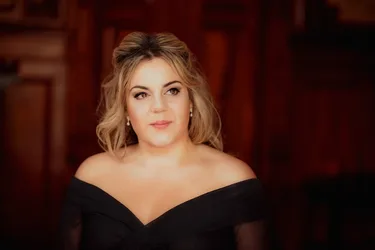
Credit: Anatole Klapouch
What do you see as the biggest challenge in advancing women’s representation in music today?
One of the biggest challenges is that the imbalance remains deeply embedded in the structures of the music industry. Programming traditions, commissioning patterns, and leadership networks have historically favoured a narrow group of voices, and change within these systems can be slow.
Another challenge is visibility. For centuries, many brilliant women composers were overlooked or excluded from the canon, which means their music is still less familiar to programmers and audiences today. This creates a cycle: if the music isn’t programmed, audiences don’t hear it; and if audiences don’t hear it, it is often considered risky to programme.
The same dynamic applies to recordings. Decisions about what gets recorded are often driven by commercial expectations rather than meaningful discovery. When music by women is not recorded, it becomes harder for performers, programmers, and audiences to encounter it.
But the issue has never been talent. Talent has always been there. The challenge is ensuring equal access to opportunity and making sure the industry actively seeks out and amplifies these voices – not only in the month of March.
Recent research by Donne shows that progress is still fragile. We have even seen a decrease in the number of works by women programmed by orchestras, which, in the 21st century, is quite shocking. Our latest report on the BBC Proms also highlighted that although 47% of the concerts included at least one piece by a woman, these works accounted for only around 8.6% of the total stage time. This highlights another challenge: inclusion does not always translate into meaningful representation.
The reality is that the repertoire is far richer and more diverse than what audiences currently hear in our concert halls. What we need now is a collective decision from the industry to stop defending the status quo and start sharing this extraordinary music with audiences.
Are you seeing progress in programming and leadership roles when it comes to women in classical music?
There has been some progress, and it is important to acknowledge that. Compared to a decade ago, there is greater awareness of the need for representation in classical music, and more institutions are beginning to look critically at their programming choices.
We are also seeing more women stepping into leadership roles as conductors, artistic directors, and decision-makers within organisations. This matters enormously because leadership shapes not only what appears on stage, but also how institutions imagine the future of the art form.
However, the pace of change remains slow. While individual concerts or festivals may highlight music by women, the overall balance across entire seasons still tends to reflect long-standing traditions that favour a very small portion of the music available to us.
What encourages me is that the conversation is changing. More artistic leaders and programmers are beginning to recognise that representation is not only about fairness – it is also about artistic discovery. There is an extraordinary wealth of music waiting to be explored.
As you mark Donne's 8th anniversary, are there any recent milestones or developments you'd like to highlight?
Reaching our eighth anniversary is a meaningful moment because it shows how far a small idea can grow when people believe in it. Donne started as my personal passion project and has now grown into an internationally recognised platform advocating for gender equity in music.
One milestone I’m particularly proud of is the Let HER MUSIC Play© campaign, which culminated in a 26-hour global concert featuring music written entirely by women and non-binary composers, and set a Guinness World Record for the longest acoustic music livestream.
Another important pillar of Donne’s work is research. Our reports provide transparent data that helps institutions measure progress and understand where change is still needed.
At the same time, our online database of women composers – the Big List – continues to grow in impact. It now receives over 3,000 visits a day from musicians, programmers, and researchers around the world. And I’m especially excited to share that we have recently uncovered more than 18,000 women composers. We have launched a campaign to ensure this updated list is freely accessible so performers, educators, and institutions everywhere can access this repertoire.
Where do you see Donne making the greatest impact in the coming years?
In the coming years, I see Donne making the greatest impact through three areas: data, advocacy, and cultural storytelling.
Data helps us understand where the industry stands and where change is needed. Advocacy helps translate that knowledge into action. And storytelling – through concerts, campaigns, and artistic projects – helps audiences emotionally connect with the importance of representation.
Ultimately, our goal is not just to highlight inequality, but to help reshape the musical landscape so that future generations experience a repertoire that truly reflects the diversity and richness of creative voices in our world.
I often imagine a future concert hall where audiences simply experience great music – without ever wondering why it took so long for some of these voices to be heard. Wouldn’t you be curious to hear that concert?
Mentorship & Professional Networks
shesaid.so
shesaid.so is a global community for women and gender-expansive people working in music, founded in 2014 and now active in more than 45 countries. Its members span the full spectrum of the industry, including artists, managers, bookers, label staff, journalists, and technologists, making it one of the most cross-disciplinary networks in the space.
At its heart, shesaid.so is about expanding connections for and with women in the industry. Its events, ranging from intimate local meetups to larger industry summits, create spaces where women in music can share knowledge, collaborate, and support each other in ways the mainstream industry rarely offers. The organization also runs mentorship programs, hosts talks and panels, and publishes research on gender equity.
Women in CTRL
Women in CTRL is a UK-based initiative focused specifically on increasing the representation of women and girls in music production and the wider creative industries. Through workshops, events, and mentorship, it aims to connect aspiring female producers and creators with established professionals who can offer both practical guidance and a clearer sense of what a career in production can look like.
The organization places particular emphasis on visibility and is built around the idea that you can't be what you can't see. By showcasing female producers and connecting them directly with the next generation, Women in CTRL aims to transform the culture of music production from the inside out.
The F-List
The F-List is a UK-based directory of female and gender-minority musicians spanning a remarkable range of genres, from classical and jazz to punk, electronic, and everything in between. Its purpose is to simply make female talent impossible to ignore.
Bookers, promoters, festival programmers, and music supervisors can use the database to find artists for gigs, sync opportunities, and events. For musicians, being listed increases visibility within professional circles, where discovery often happens through exactly these kinds of informal searches. In an industry where opportunity usually comes down to who knows about you, a resource like The F-List is more valuable than it might seem at first glance.
Technical Training
SoundGirls
SoundGirls is a nonprofit organization dedicated to empowering women and gender-minority individuals working in professional audio and music production. Founded in 2013, it has grown into a global network offering mentorship, scholarships, job listings, and access to a community of audio professionals across live sound, recording, broadcast, and post-production.
For independent artists looking to produce their own music – or for those considering a career behind the production desk – SoundGirls is one of the most practical and welcoming entry points available. Its resources are genuinely useful at every stage, from complete beginners to working professionals navigating career transitions. The community ethos is strong, and the organization's reach spans dozens of countries.
Women's Audio Mission
Based in San Francisco, Women's Audio Mission (WAM) is a nonprofit recording studio and training facility built by and for women, girls, and gender-expansive individuals. Its programs range from introductory music production workshops for young people to professional-level training in audio engineering and studio practice.
What makes WAM unique is its blend of physical infrastructure and educational programming. The idea is that access to a real studio can significantly change what learning looks like and what is possible. Since its founding, WAM has trained thousands of women and girls, many of whom have pursued careers in recording, live sound, and music technology. It stands as a testament to what access, when truly available, can achieve.
Education Pipeline
Girls Rock Camp Alliance
If advocacy organizations are pushing from the top and networking groups are supporting those already in the industry, Girls Rock Camp Alliance (GRCA) is doing something just as important at the very beginning.
Founded to support and connect rock camps for girls, women, and gender-expansive youth worldwide, GRCA is essentially about empowerment before a music career even begins. Rock camps run by GRCA member groups give participants the opportunity to learn instruments, form bands, write original songs, and perform – often within just a week.
The goal isn't just to give access to music education but also to foster confidence, community, and the experience of standing on stage and being heard. With chapters across North America, Europe, Latin America, and beyond, GRCA's model has proven to be highly scalable. The ripple effects are lasting: many of today's active female musicians first found their voice at a Girls Rock Camp.
Regional & Grassroots Initiatives Making an Impact
female:pressure
female:pressure is a network of female, non-binary, and transgender artists working in electronic music and the broader club and festival culture. Founded in Vienna, Austria, in 1998, it is one of the longest-running communities of its kind and has become an essential reference point for gender equity conversations, specifically in electronic music.
The network's annual FACTS report – which surveys gender representation across electronic music festival lineups worldwide – has played a key role in holding promoters and bookers accountable in a scene that has often celebrated its progressiveness while lagging on representation. Beyond the data, female:pressure functions as a genuine community, where artists across generations and locations can connect, share resources, and support each other's work.
Femme Africa
Femme Africa is a platform dedicated to celebrating the voices of African women across creative industries, with a growing focus on music. Operating across multiple African countries, it works to increase the visibility of female artists, provide professional development resources, and build connections between women working in music and the broader creative economy.
In contexts where gender inequality intersects with economic barriers, infrastructure gaps, and limited access to international markets, platforms like Femme Africa serve a critical function, not only as advocates but also as practical support systems for artists building careers in challenging conditions.
Music In Africa Foundation
The Music In Africa Foundation is a pan-African organization supporting the development of the continent’s music sector through research, information sharing, and capacity building. While its focus is broad, the Foundation has increasingly prioritized gender equity as a core strand of its work, recognizing that women across Africa face compounded barriers to participation and recognition in the music industry.
Through its research publications, events, and professional development programs, the Foundation is helping to build a more complete and inclusive picture of African music, reflecting the full range of voices shaping it.
How Independent Artists Can Get Involved
If you're an independent musician navigating your career on your own terms, the good news is that many of these organizations actively welcome artists at every stage of their journey.
1. Join Professional Networks
Membership in organizations like Women in Music, shesaid.so, and SoundGirls is often free or low-cost. Joining gives you access to communities, professional resources, events, and job boards that can be difficult to find through traditional industry channels.
2. Apply for Funding Opportunities
Grant programs typically run on fixed deadlines – often once or twice a year – so preparation matters. Read the criteria carefully, tailor your application, and be specific about how the funding would support your artistic or professional development.
3. Participate in Mentorship Programs
Mentorship is valuable at every career stage. Many programs focus on real-world challenges such as production, licensing, touring, or building sustainable income streams. Approach mentorship as a long-term relationship: arrive prepared, ask thoughtful questions, and follow up afterwards.
4. Leverage Artist Databases & Visibility Platforms
Make your work discoverable. Submit your profile to platforms like the She Is the Music database and the F-List, which are actively used by labels, bookers, and music supervisors searching for talent.
5. Attend Conferences & Summits
Events hosted by organizations like shesaid.so and female:pressure create spaces where meaningful professional relationships can develop. Showing up with curiosity, contributing to discussions, and staying engaged over time can lead to collaborations and opportunities.
For independent artists managing distribution, marketing, and rights on their own, connecting with these ecosystems can significantly expand your professional infrastructure – often in ways that traditional label pathways no longer provide.
Conclusion
The transformation of the music industry does not happen on its own. It is often the result of sustained effort from artists, advocates, and organizations working to reshape how opportunities are created and shared.
Around the world, initiatives dedicated to advancing women in music are expanding access to funding, education, leadership roles, and professional visibility, helping to build a more inclusive industry from the ground up.
For independent artists, these initiatives offer far more than symbolic support. They provide practical tools, professional networks, mentorship, and resources that can meaningfully influence long-term career development.
Progress is usually slow, but it happens. As more institutions commit to accountability and collaboration across the industry grows, the music world moves closer to a future where representation is standard, not an exception – and where the full diversity of creative voices can finally be heard.
To learn more about how representation is evolving across different parts of the industry, explore our articles on initiatives such as Spotify’s EQUAL program and Deezer’s women in music initiatives.
FAQs
Ready to get your music out there?
Distribute your music to the widest range of streaming platforms and shops worldwide.
Martina is a Berlin-based music writer and digital content specialist. She started playing the violin at age six and spent ten years immersed in classical music. Today, she writes about all things music, with a particular interest in the complexities of the music business, streaming, and artist fairness.

